
Where Annex Releases Go
The Annex is an older connected Sheriff jail component, not a separate agency. A person may move between campus units without any release event. Actual departure from Canyon custody may mean bond, time served, dismissal, completion of a county sentence, an alternative placement, or transfer to another custodian. Ask for authority and receiving-authority fields so an internal housing move is not confused with a legal release.
The decisive local document is the jail release form or log. Idaho Jail Standards require it to identify release date and time, authority for release, receiving authority when one exists, and the releasing deputy. Those fields separate a community departure from a handoff. A court order can explain legal authority, but it does not supply the exact moment Canyon County relinquished custody. If the form names a receiving agency, continue the check in that agency's system.
Confirm a Annex Release
Use the Canyon County tools as clues, then obtain the event record. The current roster expressly covers people currently housed and can include SILD, Pretrial Release, ICS, civil contempt, and certain juvenile-related categories. Current Arrests supplies a recent booking image, County ID, arrest time, agency, charges, and a VINE link, but it has no release date or released flag. Neither tool alone proves discharge.
- Search the Canyon jail roster and Current Arrests, matching the County ID and more than a name.
- Call the detention status line at 208-454-7541 for a current custody question, especially when a program placement may explain the result.
- Check the specific person in Idaho VINE. Treat an alert as a timely clue, not a certified archive.
- Review iCourt for bond, dismissal, sentencing, or other disposition context, then request the Sheriff release form for the custody-end event.
- If the record names another custodian, verify there. Use IDOC for state custody, the receiving county for an outside hold, BOP for BOP jurisdiction, or ICE ODLS when immigration custody is implicated.
The site's Canyon County released-inmate search and records guide explains this full custody-classification path. A no-match should never be converted into a factual claim that the person is free.
Annex Records and Contact
Status questions and document requests use different Canyon County contacts. The detention center can address present status. The Sheriff Records Unit is the custodian for an archival release form, recent booking sheet, booking photograph, adult CCDC arrest history, and related jail records.
Canyon County Sheriff campus
Caldwell, ID
Main: 208-454-7540
Status: 208-454-7541
Weekday administrative hours: 8 a.m. to 5 p.m.
Submit the Sheriff records request or contact Records at 1115 Albany Street, Room 137, Caldwell, ID 83605; 208-454-7488; ccsorecords@canyoncounty.id.gov. Walk-in service runs weekdays from 8 a.m. to 4:30 p.m., while phone and email remain available to 5 p.m. The county describes email as the quickest and most cost-effective route.
Name the subject, date of birth or County ID if known, and a narrow date range. Ask for the “release form or release log showing date, time, authority or reason, and receiving authority,” plus the most recent booking sheet and signed property-return receipt if those records matter. The county does not publish a flat booking-photo price. A focused request also helps the custodian identify the correct event when a person has several bookings.
About the Annex Center
The Sheriff-operated Annex center was built in 1991 and opened in 1993. Canyon County describes a 34-bed connected historic component. The larger jail campus includes 40 work-release beds and 34 special-management or booking beds. These figures describe operations, not a list of releases, and crowding can lead Canyon County to use jails in Valley, Adams, Washington, Payette, Owyhee, or Elmore counties.
- Operator
- Canyon County Sheriff
- Role
- Primary adult intake, booking, holding, and release point
- Public lookup
- One Canyon roster and Current Arrests system for the adult Sheriff campus
- Release proof
- Sheriff release form or log, reconciled with the receiving agency when transferred
Do not treat capacity data as proof that a named person is present. The public roster is the current-person clue, and a direct status call is more useful when a transfer is being processed. The Sheriff record remains the durable source for what Canyon County did.
Annex Release Record Fields
A useful request asks for fields that answer who, when, why, and where. Protected medical or safety details may be redacted from a public copy, but the custody-chain fields remain the key to understanding the event.
| Field | What it establishes |
|---|---|
| Release date and time | When Canyon County relinquished this placement |
| Authority for release | The order, bond, sentence event, or other legal basis |
| Receiving authority | Whether another agency took custody |
| Deputy signature | Facility documentation of the completed event |
| Property receipt | Return of non-confiscated property compared with intake inventory |
Release language varies. Bond, time served, sentence completed, dismissal, pretrial release, transfer, and hold are not interchangeable. A dismissal in iCourt can resolve one case while another hold remains. A parole transition is release from prison into conditional supervision, not full discharge from IDOC.
One Canyon Campus, Several Eras
Canyon County's adult detention campus layers buildings from different periods. The Annex opened in 1948, the Haile center opened in 1993, and Pod 5 opened in 2006 as a work-release tent before becoming minimum-security general-population housing. These names describe physical components, not separate legal custody databases.
That history explains why a search for an Annex, Work Center, or Pod 5 resident returns to the same Sheriff roster, status line, VINE feed, and Records Unit. Temporary Pod 6 women's units are no longer a current facility, so an old reference to Pod 6 should not become a new release-search route. The county later explored a permanent Pond Lane facility, but a plan is not proof that a named person moved there.
The current jail facilities page is the source for the active campus descriptions. Its facility image in the project manifest documents the shared campus context.
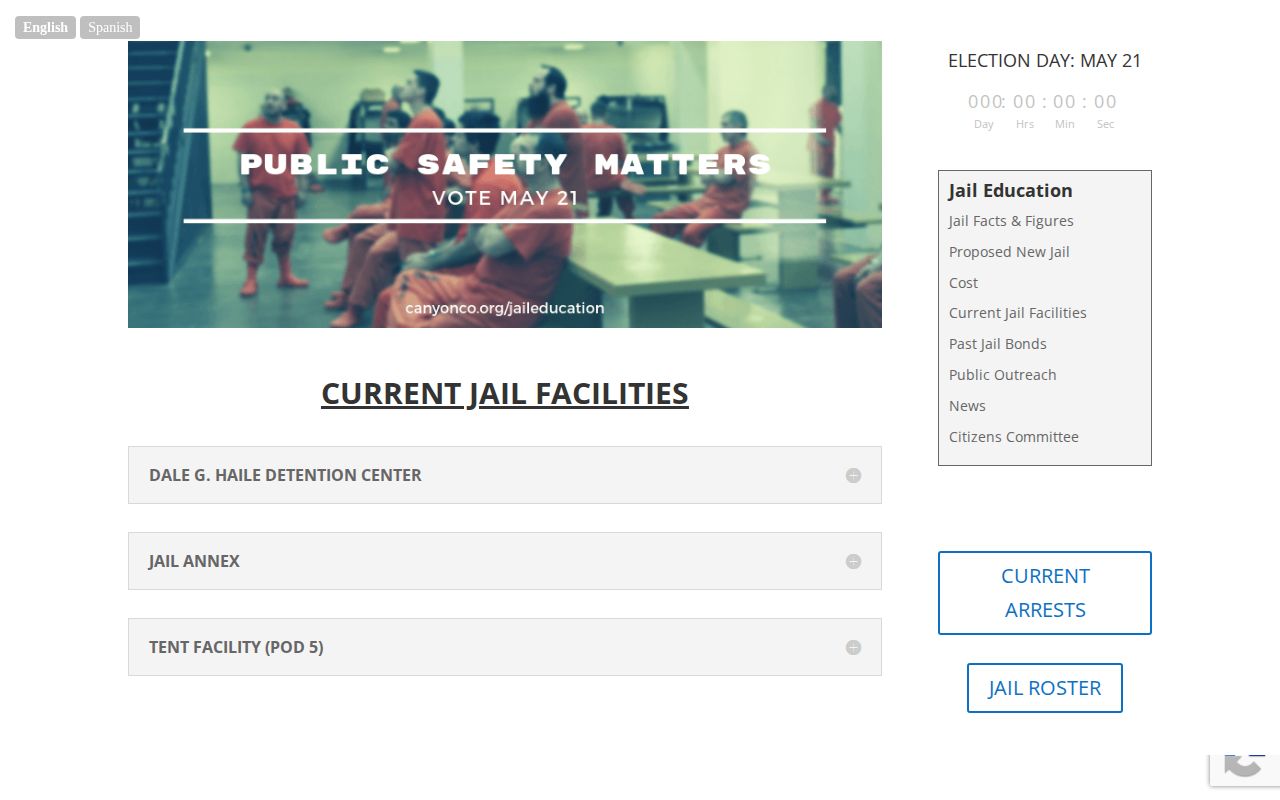
The source page supports the operational relationship among the buildings; it does not replace a person-specific release form.
Property After a Annex Release
Idaho Jail Standards call for non-confiscated property to be compared with the intake inventory and returned, with the person and deputy signing a receipt. That receipt can help establish that release processing occurred, although it should be read with the release form rather than used alone.
Canyon County has a specific commissary rule. If release occurs before an order arrives, the credited amount is returned on a prepaid card available in the detention-center visitation area; unclaimed orders are donated. A property or commissary issue does not change the legal release status, but the related records can help distinguish completed processing from an online roster update.
Note: Live tools, contacts, and facility plans can change; confirm important details with the originating Canyon County office.
Annex Housing Is Not Custody
The Annex label identifies where a person was housed inside the Canyon campus, not a separate arresting authority or release custodian. A movement into the Haile center, booking area, Work Center, or Pod 5 can happen while the same Canyon custody continues. A useful request therefore asks for the final release or transfer event, not merely a housing-assignment record.
For an older Annex reference, supply a narrow date range, County ID if known, and the associated case number. Compare the Sheriff's response with iCourt and VINE, but preserve the different role of each source. The court explains legal action, VINE reports participating feed events, and the release form records Canyon County's completed custody action.
The Annex's 1948 origin makes it locally distinctive, yet its age does not imply a separate archive. The current Sheriff Records Unit remains the request path. If a response identifies another county or state authority, contact that named custodian to determine what happened after the Canyon transfer.